Korean Parcel Locker Phrases for Apartment Life
Quick answer: Start with 택배가 왔다는 문자를 받았어요. It is polite, specific, and easy to show on your phone if pronunciation is difficult.
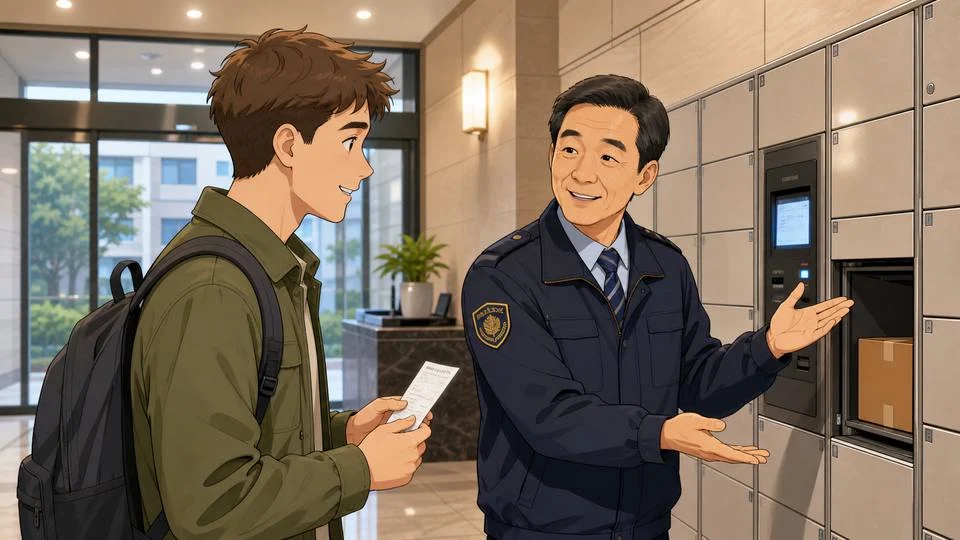
Three phrases to use first
| Korean and pronunciation | English |
|---|---|
| 택배가 왔다는 문자를 받았어요. taekbaega watdaneun munjareul badasseoyo | I received a message that my parcel arrived. |
| 어디에서 찾아요? eodieseo chajayo | Where do I find it? |
| 어떤 번호를 써요? eotteon beonhoreul sseoyo | Which code should I use? |
Romanization is only a reading aid. Listen to the Korean audio or video and copy the sound rather than reading it like English.
Real-life note: Locker systems differ by building. Never publish a real access code, and show delivery messages only to authorized staff.
Useful sentence pattern
‘어디에서’ means ‘where/at what place.’ Use it when asking where to find, buy, recharge, or complete something.
Complete beginner dialogue
Read the Korean side first. Hide the English column on a second practice pass and predict the reply.
| Korean | Natural English |
|---|---|
| 택배가 왔다는 문자를 받았어요. 어디에서 찾아요? | I received a message that my parcel arrived. Where do I find it? |
| 그 택배는 무인 보관함에 있을 거예요. | That parcel is probably in the unmanned locker. |
| 무인 보관함은 이 건물 안에 있어요? | Is the unmanned locker inside this building? |
| 네, 엘리베이터 옆에 보관함이 있어요. | Yes, the locker is next to the elevator. |
| 문자에 숫자가 많은데 어떤 번호를 써요? | There are many numbers in the message. Which code should I use? |
| 문자 아래에 있는 여섯 자리 번호를 쓰세요. | Use the six-digit code at the bottom of the message. |
| 그 번호를 보관함 화면에 누르면 돼요? | Should I enter that code on the locker screen? |
| 네, 번호를 누르면 택배가 있는 문이 열려요. | Yes, when you enter the code, the door with your parcel will open. |
| 택배가 큰 상자인데 혼자 꺼낼 수 있을까요? | The parcel is a large box. Can I take it out by myself? |
| 무거우면 제가 택배를 같이 들어 드릴게요. | If it is heavy, I will help you carry the parcel. |
| 먼저 보관함에서 확인해 볼게요. | I will check the locker first. |
| 좋아요. 번호가 안 되면 문자를 다시 보여 주세요. | All right. If the code does not work, show me the message again. |
30-second speaking drill
- Read the first key phrase slowly.
- Repeat it once without looking at the English.
- Replace one noun, time, number, or item with information you need.
Practice another real-life scene
Find more Korean conversations for daily life.
See all Living in Korea lessonsReview standard: Korean and English lines are matched to the rendered Easy Korean Daily source. Changeable real-world details are labeled as examples.
